
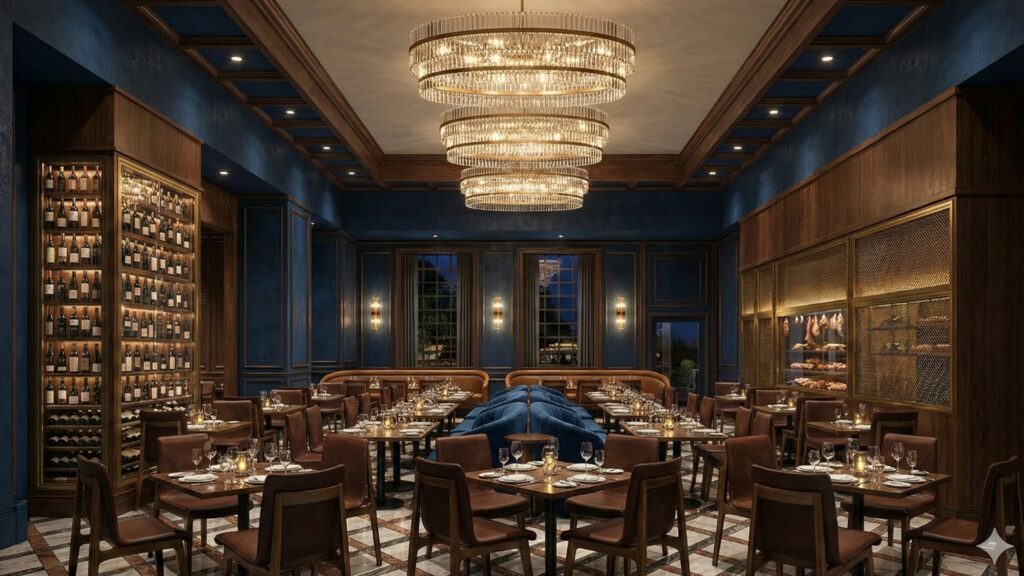

Stags Head Steakhouse at Pan Pacific Marina offers a rich, layered interior reminiscent of dining in an esteemed dining hall of an Edwardian estate in the UK. Image: Stag Heads Steakhouse.
Take confidence in using textures in interiors. Many designers are now realising that textures in spatial contexts can be a powerful tool to define zones, create depth and introduce tactile interest, transforming flat surfaces into engaging, layered environments without relying solely on colour or pattern. Texture can be used to balance bolder colour and form.
Layered textures mimic the horse’s layered strength and agility, adding tactile depth that embodies resilience and vitality. Bouclé, raw timber, brushed stone and plastered surfaces introduce tactility that tempers visual intensity. These materials are layered with intent, creating spaces that feel robust and lived in. Texture functions as a grounding device, particularly in expressive interiors. Designers also integrate mixed finishes, such as glossy ceramics beside matte stone or soft textiles against polished metals to heighten sensory contrast. Strategic layering ensures that interiors feel dynamic while remaining harmonious, encouraging closer inspection and tactile engagement.
To read the full feature, click here.